Millwork Installation for Commercial Spaces: Why Quality Matters
Introduction
If you're comparing commercial millwork installation services, quality should be near the top of your checklist. In busy commercial spaces, millwork gets touched, leaned on, cleaned, and used every day, so poor materials or sloppy installation show up fast.
At Hartford Building Company, millwork isn't a side task, we install it as part of full commercial interior fit-outs. Our team brings decades of field experience across offices, schools, hospitals, hotels, and municipal buildings, with licensed and insured workmanship and start-to-finish project coordination. That hands-on experience is what this guide is based on: what holds up, what fails, and what to look for before you hire anyone.
Commercial millwork is the finished woodwork built into a space, things like reception desks, built-in cabinetry, wall paneling, trim, and casework. It shapes how the space looks and how it works.
The Role of Millwork in Commercial Interiors
Millwork is where design meets daily use. It's not just "decor." It often becomes the part of the space people interact with most.
In many commercial interiors, millwork helps you:
- Create a clean, professional first impression
- Add storage without clutter
- Guide foot traffic (especially in lobbies, retail, and clinics)
- Support how teams work (office millwork like copy areas, break rooms, and built-ins)
Millwork also ties different finishes together, flooring, paint, lighting, glass, and metal. When the details align, the whole space feels intentional.
Benefits of High-Quality Commercial Millwork
Enhancing Brand Image and Professionalism
People judge a space quickly. Well-made architectural millwork can make a business feel more trustworthy, organized, and higher-end, without saying a word.
Quality millwork supports branded environments by helping you build consistency in:
- Reception and waiting areas
- Conference rooms and feature walls
- Retail displays and service counters
- Signage backers, slat walls, and accent paneling
Even small details matter here. Clean seams, tight corners, smooth reveals, and level surfaces are what separate "custom" from "close enough."
Functionality and Durability in High-Traffic Environments
Commercial spaces get more wear than homes. That's why durability isn't optional.
High-quality millwork holds up better because it usually includes:
- Stronger cores and stable sheet goods (less warping)
- Better edge banding and durable finishes (less chipping)
- Proper backing and fastening (less loosening over time)
- Thoughtful design for cleaning and daily use (fewer damage points)
Good built-in cabinetry and commercial casework should open smoothly, close cleanly, and stay aligned, even after heavy use. The goal is fewer repairs, fewer call-backs, and a space that still looks sharp years later.
Seamless Integration with Other Trades
Commercial projects move fast, and millwork installation has to work with everything around it, electrical, plumbing, flooring, drywall, glass, HVAC, and paint.
Strong commercial millwork design and installation considers:
- Power and data needs (outlets in desks, grommets, access panels)
- Clearances for doors, appliances, and ADA requirements
- Lighting coordination (under-cabinet lighting, feature wall lighting)
- Floor and wall conditions (leveling, shimming, and transitions)
When millwork is planned and installed correctly, it looks "built-in" on purpose. When it's not, it looks forced, gaps, uneven lines, and last-minute patches.
Common Millwork Elements in Commercial Projects
Commercial millwork can be simple or complex, but these are some of the most common millwork products for commercial spaces:
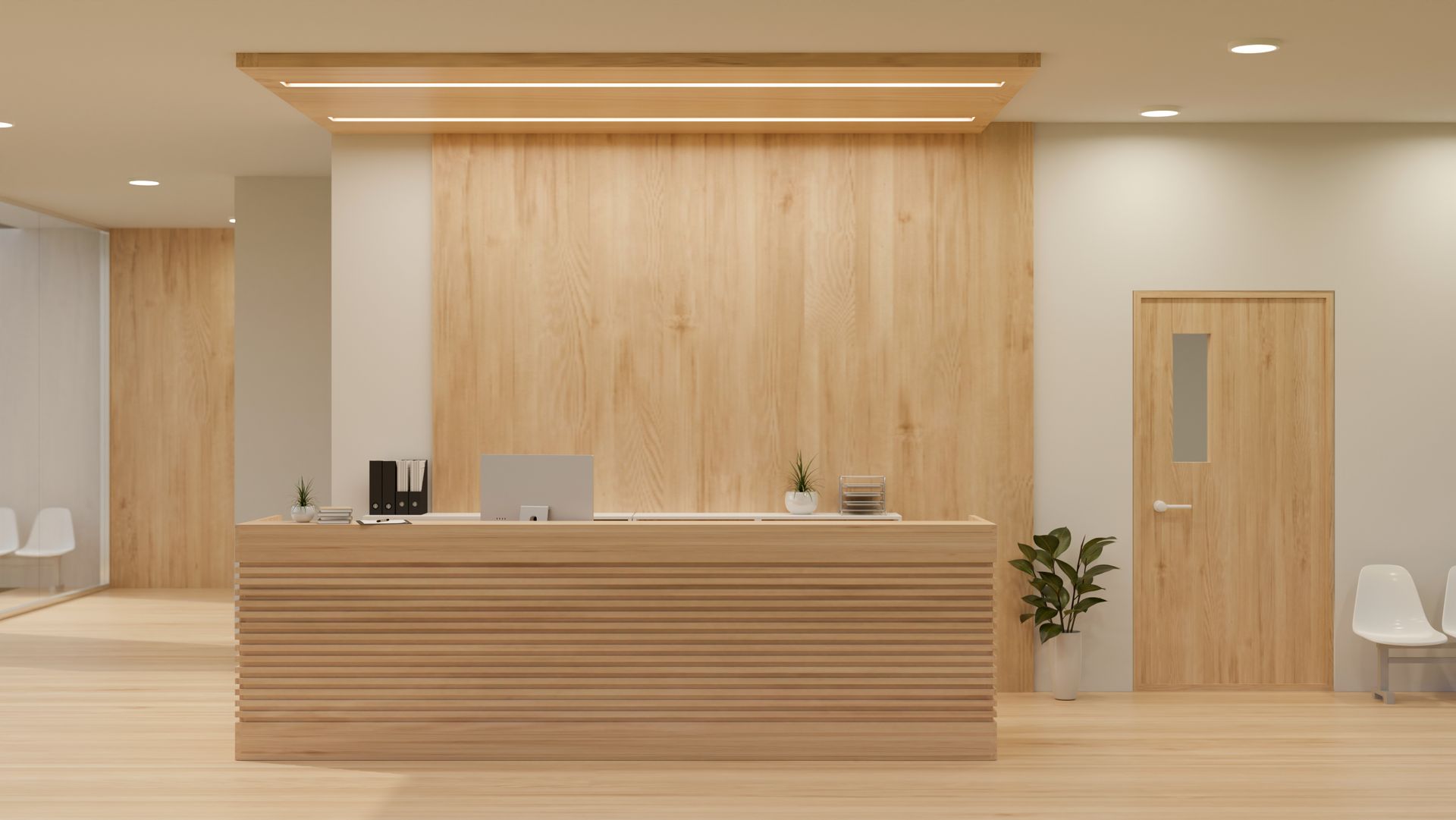
- Reception desks and transaction counters
- Wall paneling and decorative feature walls
- Built-in cabinetry for break rooms, copy rooms, and storage
- Commercial casework for clinics, labs, and back-of-house areas
- Shelving and display units for retail and showrooms
- Trim installation for doors, windows, and transitions
- Bench seating and banquettes for hospitality
- Closets and locker-style storage for staff areas
A quality contractor will also think through safety and compliance early. For example, ADA counter heights, toe-kick clearances, handle types, and aisle spacing can affect both usability and approvals.
Why Quality Installation Matters as Much as the Millwork Itself
Even excellent millwork can look bad if it's installed poorly.
Here's why installation quality matters so much in commercial renovations and new builds:
Fit and finish are unforgiving. Millwork sits right at eye level. If doors are uneven, reveals don't match, or seams are visible, people notice.
Commercial buildings are rarely perfectly straight. Walls can be out of plumb, floors can slope, and corners can be off. A skilled installer knows how to measure, scribe, shim, and adjust so the final result still looks crisp.
Bad installation causes real problems later. Common issues from rushed or low-skill work include:
- Cabinets separating from walls
- Countertops cracking from poor support
- Misaligned doors and drawers
- Gaps that collect dirt and moisture
- Trim that splits, lifts, or looks wavy
It impacts schedule and cost. When millwork goes in late or needs rework, it can delay other finish trades. That delay often costs more than doing it right the first time.
Quality installation is a big part of what people mean when they ask for "custom commercial millwork solutions." It's not only the shop work, it's the on-site precision.
Choosing the Right Millwork Partner for Your Project
If you're hiring commercial millwork installation services, focus on how the contractor thinks, not just what they promise. You want a team that can plan, coordinate, and execute with consistency.
Here are strong signs you're talking to the right partner:
They ask smart questions early. A good team wants to know how the space will be used, who uses it, cleaning needs, traffic flow, durability requirements, and timeline constraints.
They understand materials and finishes. Commercial millwork fabrication isn't one-size-fits-all. The right materials depend on moisture exposure, impact risk, and cleaning chemicals. The contractor should be able to explain options in plain language.
They coordinate well with other trades. Millwork touches many parts of the build. Look for a partner who can align measurements, shop drawings (if used), site conditions, and install sequencing. Working with a commercial general contractor who handles millwork in-house simplifies this coordination.
They show proof of similar work. Ask for examples of office millwork, hospitality projects, or healthcare interiors, whatever matches your space type. Experience in your setting matters.
They're clear on process and expectations. You should understand what happens at each step:
- Field measurements
- Material selection and approvals
- Fabrication timelines
- Delivery and protection on site
- Installation, punch list, and closeout
A reliable partner also helps you avoid common traps, like designing beautiful woodwork detailing that doesn't account for access panels, electrical pathways, or real-world wall conditions.
Final Thoughts on Investing in Quality Millwork
High-quality millwork does more than look good. It supports how people move through the space, how employees work, and how customers feel when they walk in.
When you invest in quality, you're really paying for:
- Better durability in high-use environments
- Cleaner aesthetics and stronger first impressions
- Fewer maintenance issues and repairs
- Smoother coordination with the rest of the build
Whether you're updating a lobby, building out a new office, or renovating a medical space, quality millwork helps the entire project feel finished, and keeps it that way.
Get Started
If you're planning a commercial build-out or renovation and want help thinking through millwork options, timelines, and install requirements, Hartford Building Company can walk you through what matters most, before anything gets ordered or installed. You can request an estimate or talk through your scope at (860) 922-0179 or hartfordbuildingco@gmail.com.
Frequently Asked Questions
What's the difference between millwork and casework?
Millwork refers to custom-built woodwork like trim, paneling, and reception desks, typically fabricated to fit a specific space. Casework is a subset of millwork that specifically describes cabinet-style units (think lab cabinets or storage systems), often built in modular sizes. In commercial projects, you'll usually need both.
How long does commercial millwork installation take?
It depends on scope and complexity. A simple trim and cabinet install in a small office might take a few days. A full lobby buildout with custom reception desks, feature walls, and integrated lighting could take several weeks. The bigger factor is often lead time for fabrication before installation even begins.
Can millwork be installed while the building is occupied?
Yes, but it requires careful planning. We often phase millwork installation in occupied spaces, working in sections, after hours, or during low-traffic periods to minimize disruption. Dust control, noise management, and clear communication with building occupants are essential.
What materials work best for high-traffic commercial spaces?
High-pressure laminate, solid surface materials, and commercial-grade veneers with durable topcoats tend to hold up best. The right choice depends on the specific environment, healthcare spaces need cleanable, chemical-resistant surfaces, while offices may prioritize aesthetics with moderate durability.
Should I hire a separate millwork installer or use my general contractor?
Using a general contractor who handles millwork in-house typically results in better coordination, fewer scheduling conflicts, and cleaner results. When millwork is treated as a separate trade, miscommunication between teams often leads to fit issues and delays.
Recent Blog post