What is a Farmhouse Kitchen?
Hartford Building Co is a licensed, insured, woman-owned builder based in Glastonbury, CT with 40+ years of experience designing and building kitchens across Connecticut. Our team has completed interior fit-outs and custom millwork installations for homes and commercial spaces, and we bring that hands-on expertise to every residential project. If you’re searching what a farmhouse kitchen is, here’s a clear, practical guide from professionals who plan, build, and install these spaces every day.
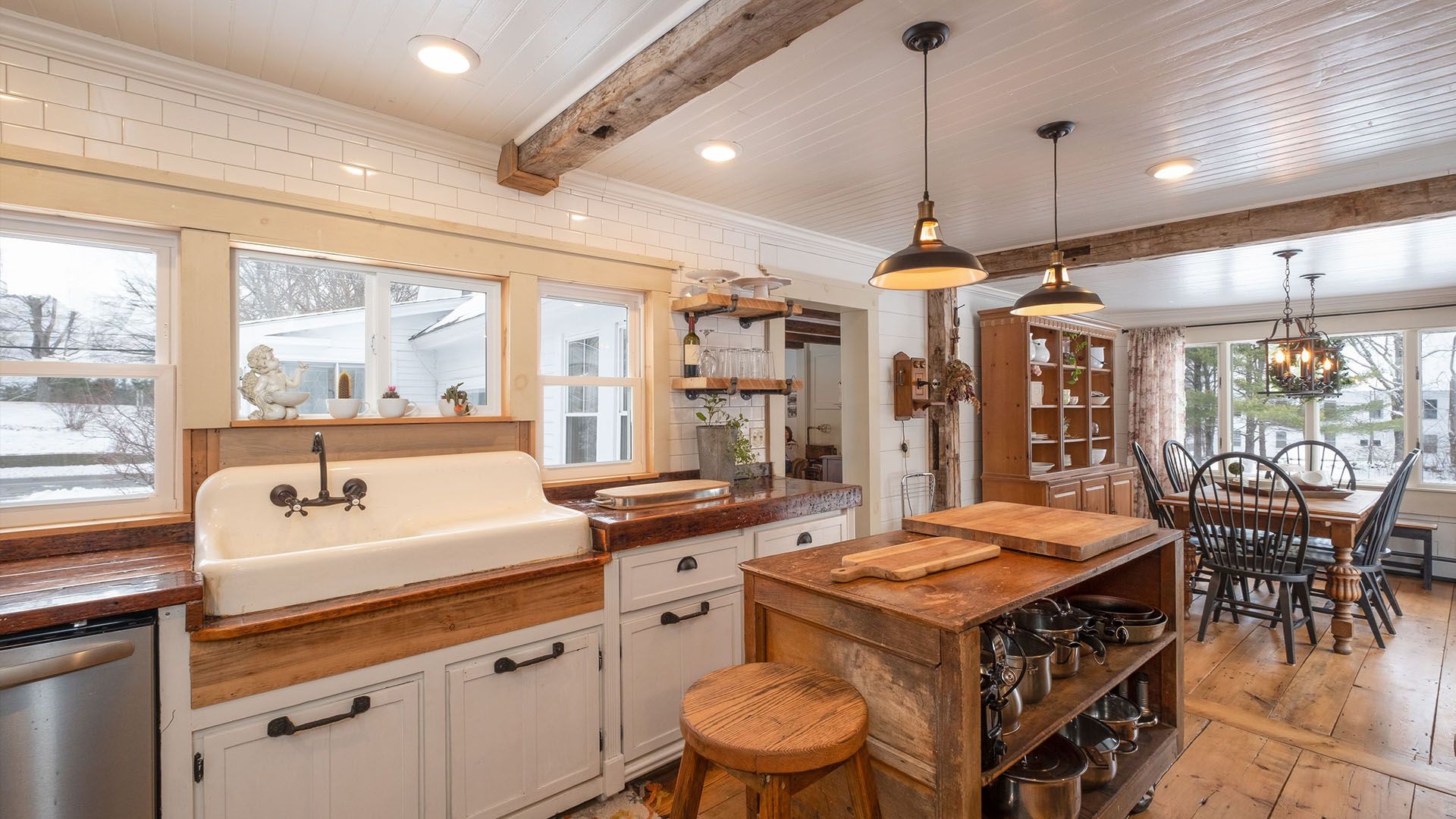
A farmhouse kitchen is a warm, hard-working space that mixes natural materials (like wood and stone), simple cabinetry, and classic details, think apron-front sinks, open shelving, and a big island, to create a cozy, timeless room that’s built for everyday use. In Connecticut, the look often blends classic New England charm with modern conveniences: durable finishes, efficient layouts, and plenty of storage.
Defining the Farmhouse Kitchen Style
A Blend of Tradition and Comfort
At its core, a farmhouse kitchen feels welcoming. Surfaces invite use, not display. You’ll see natural wood cabinets, butcher block or stone countertops, and a neutral color palette that softens the room. The design leans “country kitchen style” in spirit but stays clean and uncluttered.
Modern vs. Traditional Farmhouse Kitchens
- Traditional farmhouse focuses on reclaimed wood, exposed beams, freestanding furniture, and vintage appliances. It celebrates patina and handcrafted details.
- Modern farmhouses keep the warmth but tightens the lines: shaker-style cabinets, streamlined hardware, integrated appliances, and simplified lighting. You still get the apron-front sink and open shelving, but the overall feel is calmer and more tailored, perfect for Connecticut homes that balance history with updated living.
Key Features of a Farmhouse Kitchen
Natural Materials and Textures
Wood, stone, and metal are the backbone. Reclaimed wood, shiplap walls, and natural wood cabinets add character. Stone or butcher block countertops bring durability and warmth. These materials age gracefully, ideal for a kitchen that actually gets used.
Warm and Neutral Color Palettes
Creams, soft whites, warm grays, and earthy tones keep the space light and calm. The neutral color palette lets textures shine: the grain of a white oak island, the matte finish of a stone counter, or the subtle lines of shiplap.
Functional and Spacious Layouts
Farmhouse kitchens are made for cooking and gathering. Expect a large kitchen island for prep and seating, wide work aisles, and a layout that keeps sink, range, and fridge within easy reach. Open shelving and glass-front cabinets make everyday items visible and accessible.
Common Design Elements in Farmhouse Kitchens
Apron-Front (Farmhouse) Sinks
Deep, wide, and highly functional, these sinks handle big pots and pans and act as a focal point. Fireclay and stainless steel are common; both pair well with bridge or pull-down faucets.
Reclaimed Wood and Exposed Beams
Reclaimed wood floors, ceilings, or shelves add instant character. Exposed beams, structural or decorative, bring texture and a sense of age that suits many Connecticut homes, especially older Colonials and capes.
Butcher Block or Stone Countertops
- Butcher block offers warmth and a furniture-like feel. It’s easy to refresh with light sanding and oil.
- Stone (like quartzite, granite, or soapstone) provides durability and natural variation. Many clients choose a mix: stone on the perimeter and butcher block on the island.
Open Shelving and Freestanding Furniture
Open shelves keep everyday dishes within reach and display your favorite mugs or bowls. A freestanding hutch or vintage work table can replace a run of cabinets, adding storage and personality without making the room feel built-in heavy.
Vintage or Industrial-Inspired Lighting
Schoolhouse pendants, simple metal sconces, or industrial-inspired fixtures provide warm, focused light over islands and sinks. Aim for layered lighting: ambient (ceiling), task (under-cabinet), and accent (pendants/sconces).
Cabinetry and Storage Choices
Shaker-Style Cabinets
Shaker doors are the farmhouse staple: clean lines, timeless proportions, and easy to maintain. They work with both traditional and modern farmhouse looks.
Painted Finishes and Distressed Looks
Soft whites, creams, and muted colors (like sage or navy) are popular. A lightly distressed finish or visible wood grain can add depth. For a modern take, pair painted perimeter cabinets with a natural wood island.
Blend of Open and Closed Storage
Use a mix to balance display and function: closed bases for heavy cookware, open shelves for everyday dishes, floating shelves for décor, and a tall pantry for bulk items. If space allows, a walk-in or cabinet-style pantry keeps counters clear.
Why the Farmhouse Kitchen Remains Popular
Comfort and Functionality
This style is forgiving and family-friendly. Durable materials, deep sinks, and wide work surfaces handle daily life without fuss.
Versatility in Different Homes
Farmhouse details adapt well to many Connecticut houses, from historic properties to new builds. The palette and materials play nicely with existing millwork and flooring.
Seamless Integration with Modern Elements
You can keep the cozy feel while adding modern must-haves: induction ranges, panel-ready fridges, easy-clean finishes, and smart lighting. The result is a kitchen that looks classic but works like new.
Bringing the Farmhouse Look Into Your Kitchen
Start with Key Elements
If you’re refreshing, focus on the highest-impact pieces first: an apron-front sink, new cabinet doors in a shaker style, and updated lighting. Add a butcher block or stone island top for warmth and function.
Mix Vintage with Modern Accents
Pair reclaimed wood shelves with clean hardware. Use a vintage or freestanding piece, like a hutch or table to break up long cabinet runs. Introduce texture with woven stools, matte metal fixtures, or a shiplap feature wall.
Work with a Professional Designer or Builder
A professional can help balance proportions, plan clearances around islands, integrate ventilation, and choose finishes that age well. The goal is a cohesive space, one where every drawer, shelf, and light earns its place.
Explore our
kitchen renovation services to see how we bring farmhouse kitchens to life, or learn more about
choosing the right backsplash tile to complement your farmhouse design. If you're planning a larger home transformation, check out our
residential remodeling services and our approach to
custom millwork that adds character to Connecticut homes.
Frequently Asked Questions
What's the difference between a farmhouse kitchen and a regular kitchen?
A farmhouse kitchen prioritizes natural materials, open layouts, and functional design over trendy finishes. You'll see apron-front sinks, wood or stone surfaces, and a mix of open and closed storage. Regular kitchens may follow current design trends with less emphasis on durability and timeless character. Farmhouse kitchens are built to handle heavy use while maintaining warmth and charm.
How much does it cost to create a farmhouse kitchen in Connecticut?
Costs vary widely based on scope: a refresh with new hardware, an apron-front sink, and open shelving might run $5,000–$15,000, while a full renovation with custom cabinetry, stone countertops, and new appliances typically ranges from $40,000–$80,000+. Your budget depends on kitchen size, materials, and whether you're keeping the existing layout. We provide detailed estimates that break down costs by element.
Can I add farmhouse elements to a small kitchen?
Absolutely. Focus on high-impact details: install an apron-front sink, replace upper cabinets with open shelving on one wall, add a butcher block countertop section, and update lighting with simple pendants or sconces. Even small changes like matte hardware, a neutral paint color, and natural wood accents can shift the feel without requiring a full remodel.
What flooring works best in a farmhouse kitchen?
Wide-plank hardwood (white oak, reclaimed pine) is the classic choice and ages beautifully. For durability and easier maintenance, consider a luxury vinyl plank that mimics wood or matte-finish porcelain tile in a wood-look or stone pattern. Avoid high-gloss finishes, they read too modern. The goal is a floor that feels natural, handles spills, and complements the rest of your materials.
Do farmhouse kitchens work in modern Connecticut homes?
Yes. Modern farmhouse style blends clean lines with warm textures, making it a great fit for new builds and updated homes. Use shaker cabinets, streamlined hardware, and integrate appliances to keep the look tailored. Pair painted cabinetry with a wood island, add subtle shiplap or a single open shelf, and choose simple lighting. The result feels current but grounded, not overly trendy.
Recent Blog post